Open-Die Forging
Large, simple shapes — shafts, blocks, discs — worked between flat or contoured dies for directional grain flow at comparatively low tooling cost.
View projects →Open-die & closed-die forging, seamless rolled rings, and fabrication
A heavy steel forging and fabrication works — open-die forging, closed-die/drop forging, seamless rolled rings, heat treatment, NDT & quality inspection, and custom fabrication for energy, oil & gas, aerospace, mining, and marine industries.
Large, simple shapes — shafts, blocks, discs — worked between flat or contoured dies for directional grain flow at comparatively low tooling cost.
View projects →Near-net-shape parts driven into a die impression for tighter tolerances and more complex profiles, at higher press tonnage.
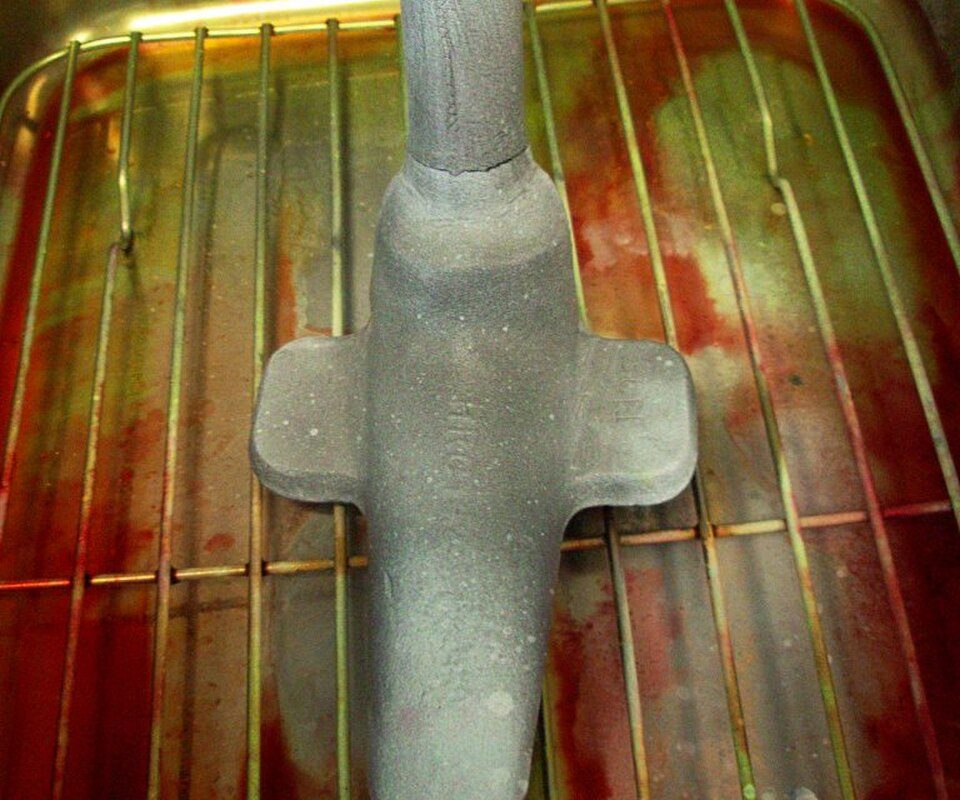
View projects →Pierced and expanded on a ring mill for continuous circumferential grain flow with no weld seam — flanges, races, gear blanks.
View projects →Normalizing, quenching & tempering, and annealing — in-house, furnace-charted, and hardness-verified against the target spec.
View projects →Ultrasonic, magnetic-particle, and dye-penetrant inspection with full material traceability and third-party witness available.
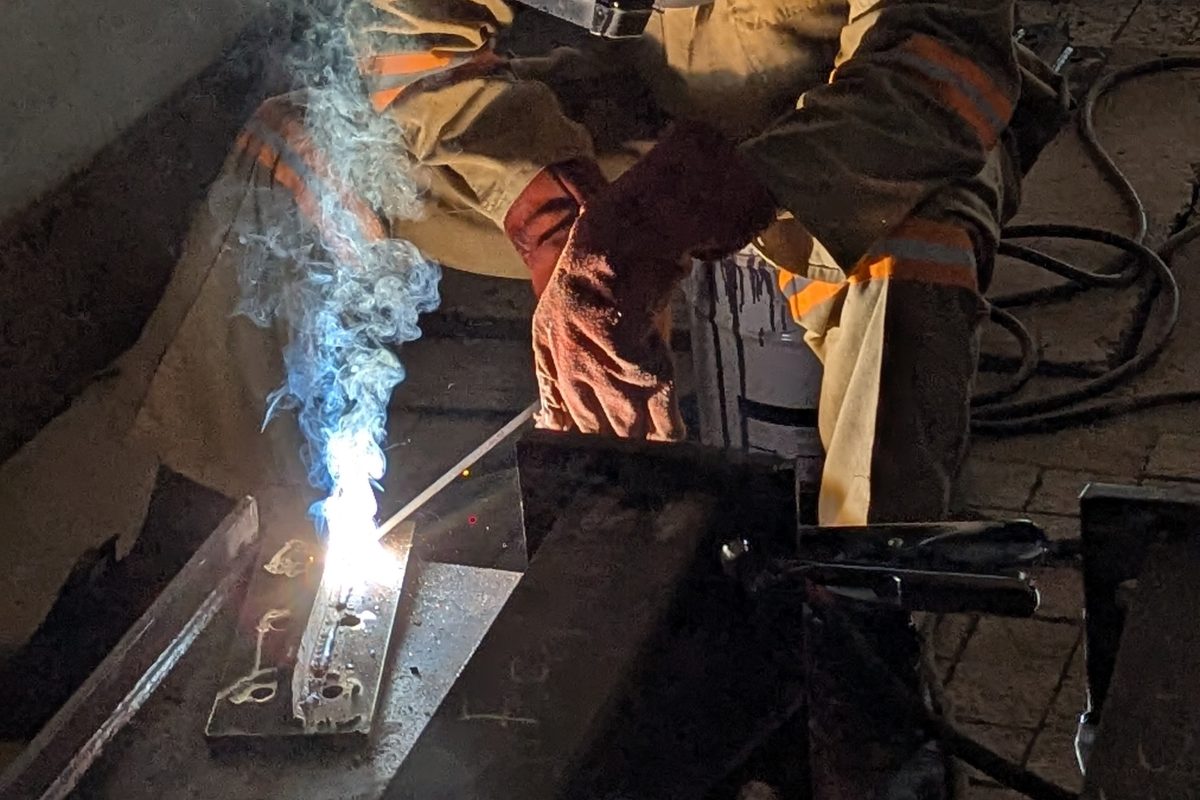
View projects →Plate-and-structural-shape weldments — skids, supports, and assemblies — built to your layout drawing, not forged.
View projects →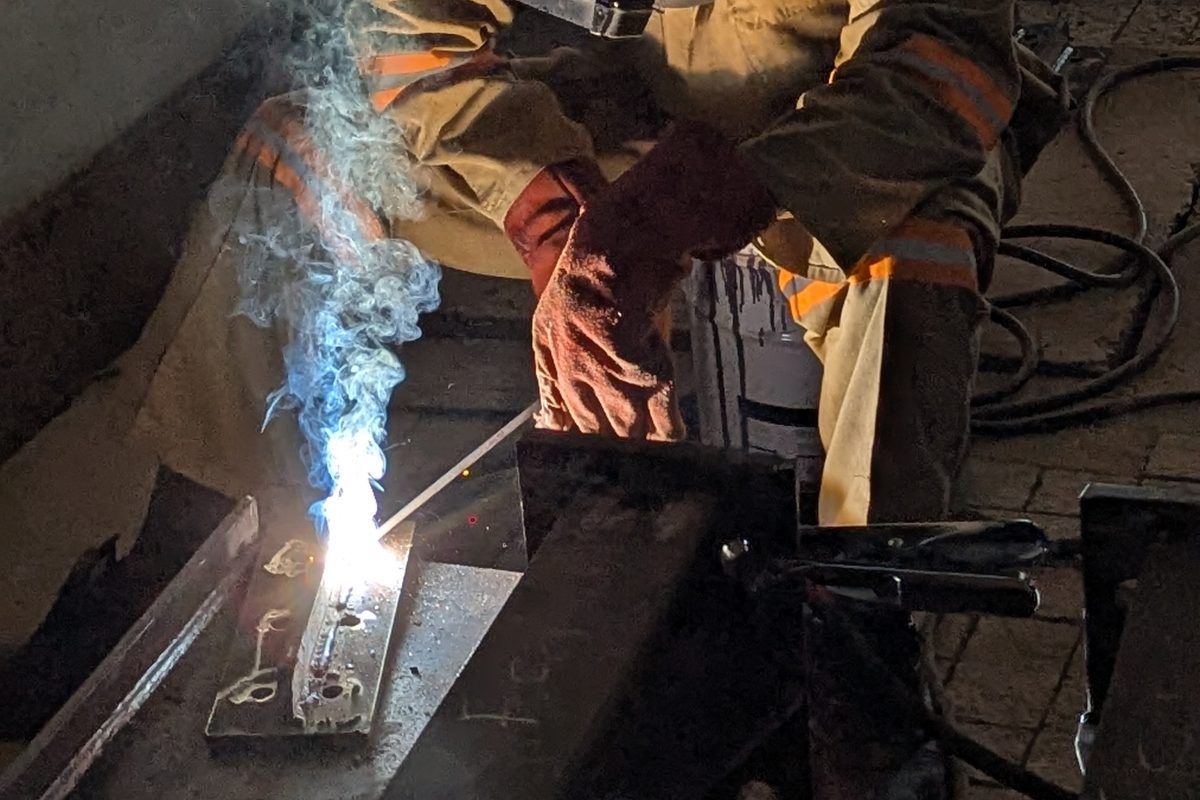
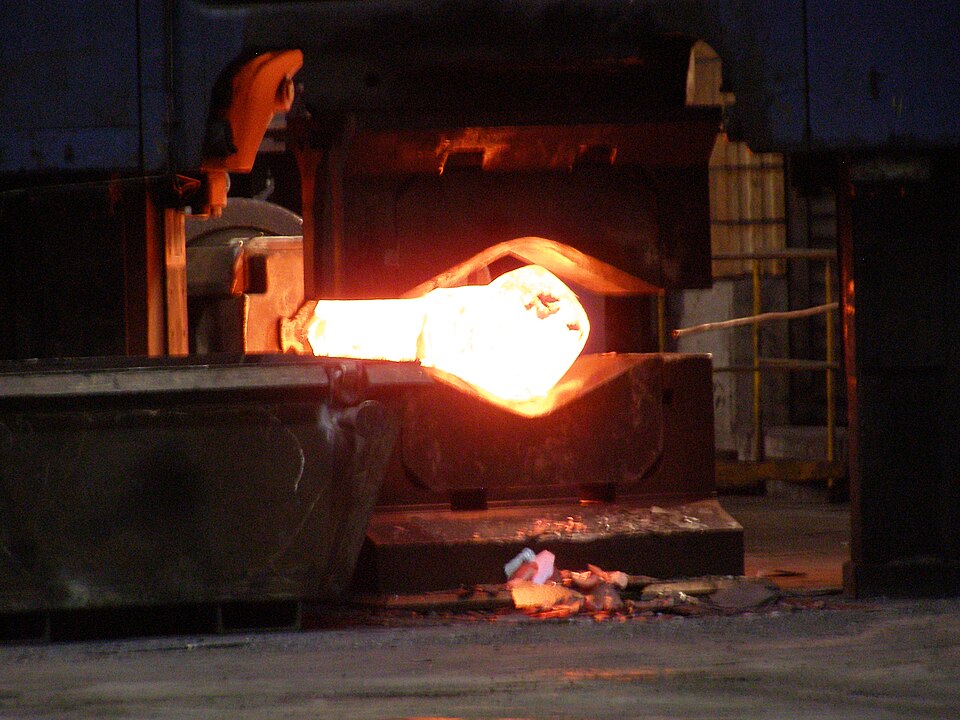
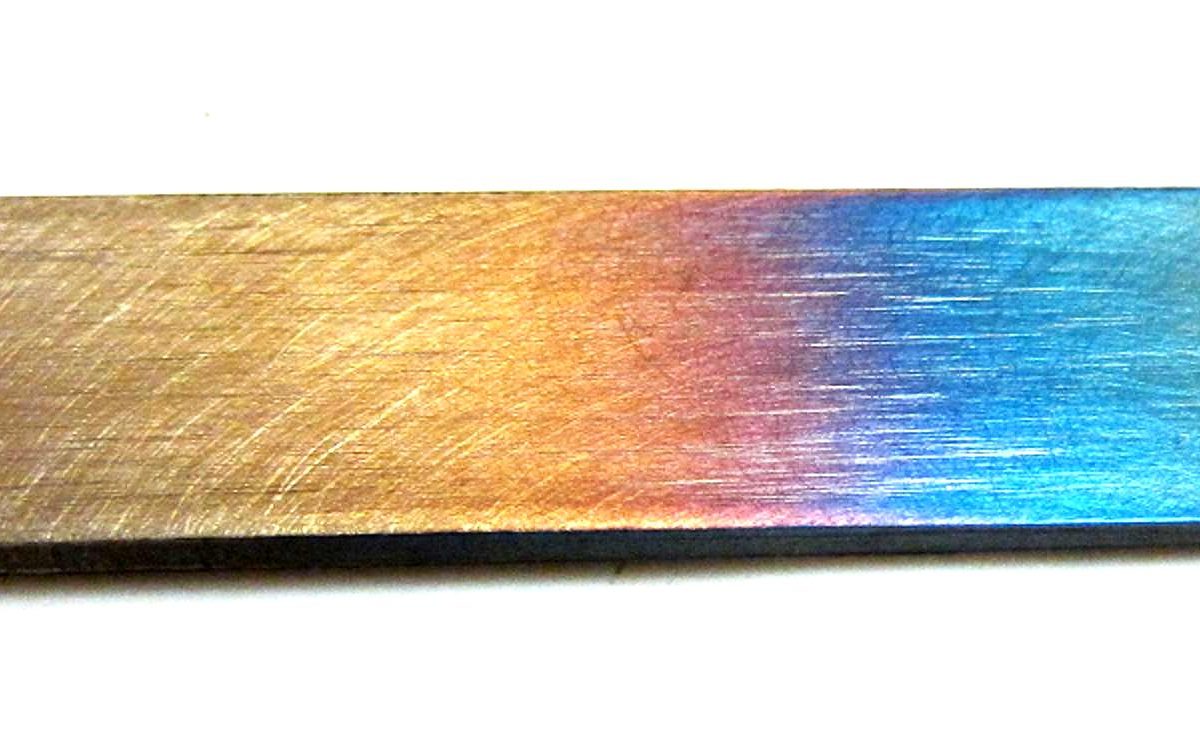
Long before pyrometers, forge operators judged steel temperature by its visible incandescent glow — real blackbody radiation physics, not folklore. Select a heat to see the real approximate temperature range and which forging operations belong there.
950–1100 °C (1740–2010 °F)
Ideal heavy-forging range
The most efficient hot-working range for heavy sections — flow stress is at its lowest practical point for plain carbon and most alloy steels, giving the most deformation per hammer or press stroke before the piece needs re-heating.
Color-temperature correspondences follow standard forging and blacksmithing references (e.g. the heat-color tables in the ASM Handbook forming/forging and heat-treating volumes), grounded in blackbody-radiation physics — a heated body shifts from dull red through orange, yellow, and toward white as its temperature rises (the Planckian locus, per Wien's displacement law). Perceived color shifts with ambient shop lighting and individual vision, which is exactly why this remains a trained field skill rather than an exact instrument reading.
A standard flow-stress-based forging-force estimate: F = k × Y × A. Pick a billet cross-section, a forging type, and a material family to see the real approximate required press tonnage.
Approximate required press force
2542.5 US tons (2306.5 tonnes)
A = 70685.8 mm² · k = 4 · Y = 80 MPa
Educational order-of-magnitude estimate only. Real production tonnage sizing accounts for strain-rate-dependent flow stress at the actual working temperature, exact die geometry, and press dynamics — normally established by a forging engineer with process data and shop trials, not a single formula.
Formula: F = k × Y × A, a standard flow-stress-based forging-force estimate — see Kalpakjian & Schmid, "Manufacturing Engineering and Technology," and the ASM Handbook, Vol. 14A, "Forming and Forging." A is the projected/contact area; Y is the material's flow stress at forging temperature (a representative average, not a strain/strain-rate-resolved curve); k is a shape/friction multiplier — roughly 1.2–1.5 for simple open-die upsetting, rising to roughly 3–12 for closed-die impression forging depending on flash and shape complexity.
Published ASTM/AISI/SAE mechanical-property ranges for five real forging and structural steel grades. Switch the highlighted property to compare at a glance, or read the full table below.
| Grade | Standard | Typical condition | Yield (MPa) | Tensile (MPa) | Elongation |
|---|---|---|---|---|---|
| ASTM A36 | ASTM A36 | As-rolled structural | 250 | 400–550 | ~20% |
| AISI/SAE 1045 | SAE J403 | Hot-rolled / normalized | 310 | 565 | ~16% |
| AISI/SAE 4130 | SAE J404 | Normalized (Cr-Mo alloy) | 460–530 | 620–690 | ~25% |
| AISI/SAE 4140 | SAE J404 | Quenched & tempered (Cr-Mo alloy) | 655–860 | 850–1000 | ~12-20% |
| AISI/SAE 4340 | SAE J404 | Quenched & tempered (Ni-Cr-Mo alloy) | 860–1400 | 1080–1500 | ~10-19% |
Property ranges are drawn from the ASTM A36 structural-steel specification, the SAE J403/J404 carbon and alloy steel standards, and aggregated published ASM Metals Handbook / mill technical-data-sheet figures. Real properties vary with section size, exact heat treatment (especially tempering temperature on the quenched-and-tempered grades), and test lot — presented here as honest ranges, not false-precision single numbers.
“They engineered the billet size against our finished part's deformation ratio, not just its finished weight — the rotor shaft came back sound end to end.”
“Full traceability and third-party witness inspection on every flange in the lot, no exceptions — exactly what our own spec required.”
“The rolled ring came in with the grain-flow orientation our fatigue analysis actually assumed — not always a given.”
“Straight answer on tonnage and lead time before we committed to a die — saved us from over-speccing a closed-die run we didn't need.”
Tell us about the part — open-die forging, closed-die/drop forging, seamless rolled ring, heat treatment or NDT service only, or custom fabrication — and we'll follow up within two business days.